Introduction
In any hospital—whether it’s an ICU, Operation Theater (OT), or General Ward—time and accuracy are everything. A patient’s vital parameters can change within seconds, and early detection is often the difference between rapid recovery and life-threatening complications.
This is where Patient Monitoring Systems play a vital role. Acting as the ultimate clinical guardian, these devices continuously track, record, and signal changes in human physiology, allowing medical teams to act before a crisis occurs.
What is a Patient Monitoring System?
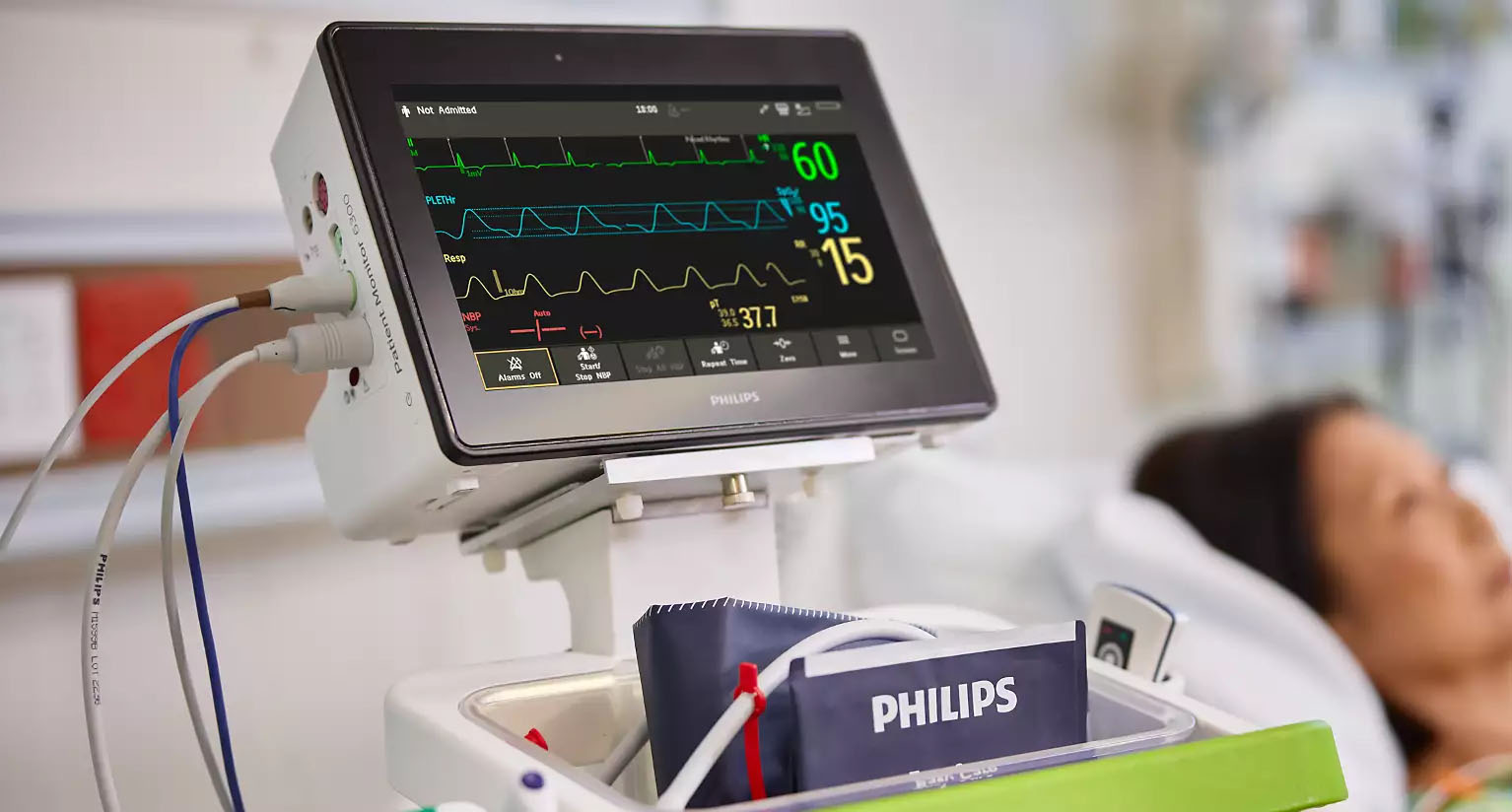
A Patient Monitor is an electronic medical device that continuously measures and displays a patient's vital physiological parameters. It translates biological signals into real-time waveforms and digital numbers on a screen, equipping doctors, nurses, and anesthetists with precise clinical data.
Key Types of Patient Monitors Used in Healthcare
Multi-Para Patient Monitors (5-Para & 7-Para):
5-Para Monitors: Measure fundamental vitals—ECG, SpO2 (Oxygen Saturation), NIBP (Non-Invasive Blood Pressure), Respiration Rate, and Temperature. Ideal for ICUs, emergency rooms, and recovery wards.
7-Para Monitors: Include advanced parameters like IBP (Invasive Blood Pressure) and EtCO2 (Capnography) for critically ill or ventilated patients.
Modular Patient Monitors:
Built for maximum flexibility in high-acuity ICUs and OTs. They use plug-and-play modules, allowing hospitals to add or remove parameters (like Anesthetic Gas Analysis or BIS) based on patient needs.
Vital Signs & Portable Monitors:
Lightweight, battery-backed devices designed for rapid spot-checks in OPDs, triage areas, or intra-hospital patient transfers.
Fetal & Maternal Monitors (CTG Machines):
Specialized monitors used in maternity wards to track fetal heart rate (FHR) and uterine contractions during labor and high-risk pregnancies.
Why Quality Patient Monitors Are Essential for Every Hospital
Early Warning System: Intelligent audio-visual alarms alert medical staff immediately if vital signs breach safe thresholds.
Streamlined Clinical Workflow: Clear touchscreen displays and central monitoring connectivity reduce human error and nurse workload.
Data-Driven Diagnostics: Trend storage allows physicians to analyze vital histories and adjust medication accurately.
Conclusion
Investing in reliable, high-precision Patient Monitoring Systems is not just an equipment upgrade—it is a commitment to patient safety and quality healthcare delivery.
Looking for reliable Patient Monitoring Equipment in New Delhi?
VMSS Lifecare Private Limited is a trusted wholesaler and supplier of top-tier 5-Para, 7-Para, Modular, and Portable Patient Monitors tailored for modern healthcare facilities.